
In this article
Most patients spend considerable time choosing between round and shaped breast implants, believing this decision will dramatically affect their results. The reality is more straightforward: implant size influences your outcome far more than implant shape.
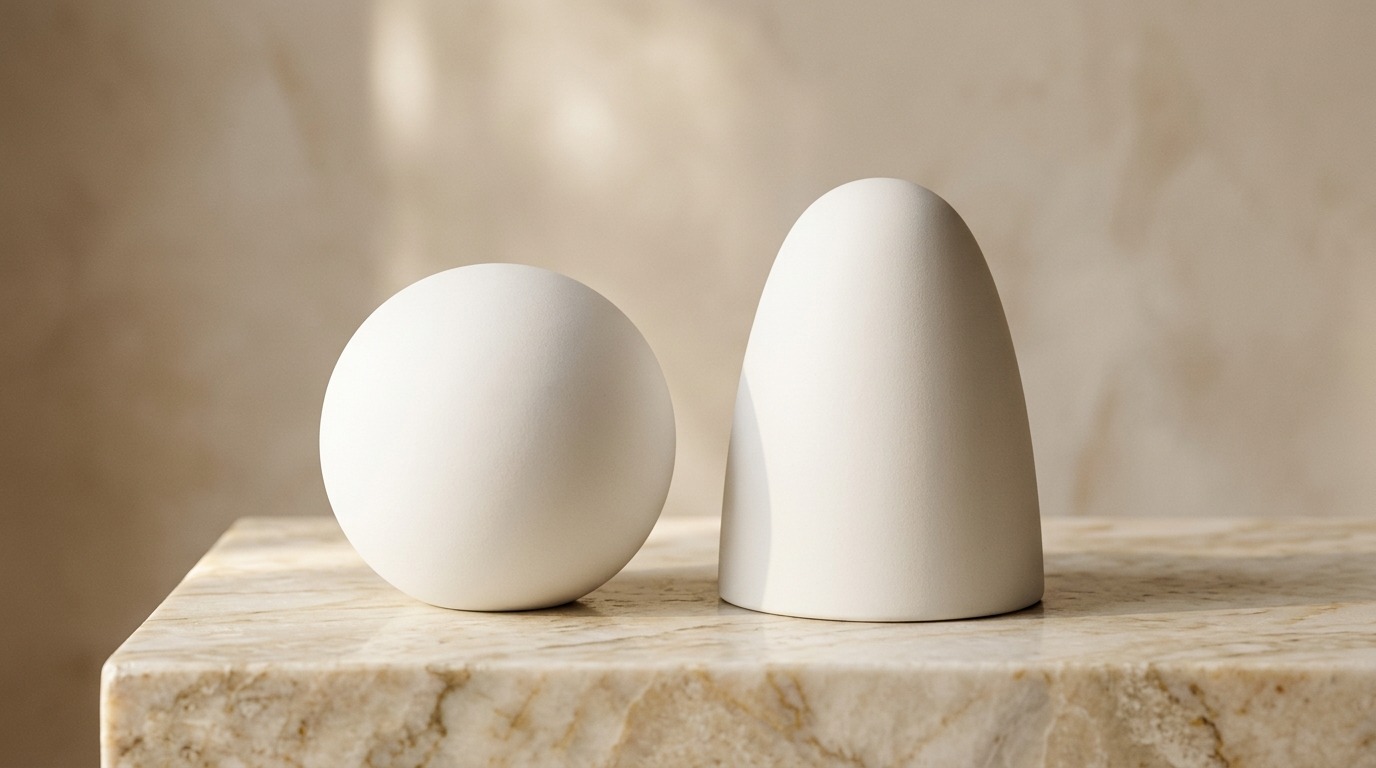
Round implants maintain a spherical diameter with an adaptable form. Shaped implants (also called teardrop or anatomical implants) feature a thicker design that mimics the natural breast contour. While shaped implants may seem like the obvious choice for a natural look, the physics of how implants settle tells a different story.
Why Implant Shape Has Limited Impact on Your Results
Here's what actually happens after breast augmentation: regardless of the implant shape you choose, the base sits at the bottom of your breast pocket. This flattens the implant's base and pushes the fill material upward and outward.
As implant size increases, the edges extend toward the sides and upper slope of your breast. This occurs with both round and shaped implants. The result? Most patients achieve fullness in identical locations, regardless of their implant's original shape.
The breast tissue and muscle above the implant ultimately determine your final contour more than the implant's pre-surgical shape.
Why I Usually Recommend Round Breast Implants
Round implants offer three significant advantages over shaped alternatives:
Lower Cost
Round implants cost less than shaped implants. For most patients, this price difference isn't justified by improved results.
More Surface Options
Round implants come in both smooth and textured surfaces. Shaped implants require textured surfaces to prevent rotation within the breast pocket. This textured requirement limits options and may not produce the most natural-looking result for every patient.
No Rotation Risk
If a round implant rotates during healing, your results remain unchanged. A rotated shaped implant, however, can create an unnatural appearance. While the textured surface reduces this risk, it doesn't eliminate it entirely.
When Shaped Implants Make Sense
I do recommend shaped breast implants for patients with specific body types—particularly women with tall, thin frames and long, narrow chests.
These patients typically have significant distance between their collarbone and the top of their breasts. This anatomy can make breasts appear to sit lower on the torso, creating a prematurely aged appearance. Shaped implants subtly raise the transition point between the upper chest and breast, delivering a more youthful contour.
For these select patients, the shaped implant's teardrop profile provides benefits that justify the additional cost and rotation risk.
The Bottom Line on Breast Implant Shape
Focus your decision-making energy on implant size, placement, and surface texture rather than shape. These factors influence your results more significantly than whether your implant starts round or teardrop-shaped.
During your consultation, we'll determine if your anatomy falls into the narrow category where shaped implants provide genuine advantages. For most patients, round implants deliver equally natural results with fewer potential complications.
Frequently Asked Questions
Do shaped implants look more natural than round implants?
Not necessarily. Once placed, both implant types conform to your breast pocket in similar ways. Your natural breast tissue and chest anatomy influence the final appearance more than the implant's original shape.
Are textured implants required for shaped breast implants?
Yes, shaped implants must have textured surfaces to prevent rotation. Round implants offer both smooth and textured options, providing more flexibility in achieving your desired results.
What happens if a shaped implant rotates?
A rotated shaped implant can create an unnatural breast contour that may require surgical correction. This risk, while relatively low with modern textured implants, doesn't exist with round implants.
Ready to explore your breast augmentation options? Schedule a consultation to discuss which implant type aligns with your anatomy and aesthetic goals.
Related Procedures
Questions about this procedure? Dr. Schwartz will give you a direct, honest answer at your consultation.
Back to Journal