
Cheek Augmentationin Dallas
Cheek implants that add volume and definition to the midface.
Cheekbones That Look
Like Bone, Not Filler.
Some people's cheekbones have always been flat. In others, the midface has lost volume with age or weight loss, and the face starts to look deflated or tired. Many have had filler and liked the result, but don't want to keep repeating it, and filler can look puffy when too much is used.
Cheek implants add permanent projection at the level of the bone. Dr. Schwartz places each implant through a small incision inside the mouth along the upper gums, in a secure pocket directly over the cheekbone, so there is no scar on the face. Drawing on over 25 years of experience, he chooses an implant that suits your existing bone structure. The aim is to look like you have good cheekbones, not filler. At the consultation, he will tell you whether filler or an implant suits your goals.

The Procedure
Cheek implants suit people whose midface looks hollow or lacks definition because of aging, genetics or weight loss. At your consultation, Dr. Schwartz examines your face (cheekbone position, midface height and soft tissue thickness) and chooses an implant shape that suits your natural structure.
Dr. Schwartz typically places cheek implants through small incisions inside the mouth along the upper gums, so there is no visible scar on the face. He makes a pocket under the lining of the bone (subperiosteal) directly over the cheekbone, which holds the implant firmly against the bone so it stays in place.
Cheek implants are placed as an outpatient procedure in our private surgical suite under general anesthesia. Filler can be done in the office in about 20 minutes, but it is temporary. For a larger, permanent change, Dr. Schwartz recommends implants.
Filler works well for temporary volume, but too much can look puffy. Cheek implants give permanent definition that looks like bone rather than added volume, and need no maintenance. For lasting projection, Dr. Schwartz recommends implants.
Most patients return to work within 5 to 10 days. Expect some swelling and bruising for about 14 days. Dr. Schwartz recommends avoiding vigorous exercise and anything that strains the face for three weeks. The improvement shows right away, but it takes three to six months for the tissues to settle into the final contour.
Cheek augmentation is often done together with chin augmentation or a facelift. Dr. Schwartz looks at the whole face, not just the cheeks.
Cheek Augmentation Portfolio
Drag the handle to compare.
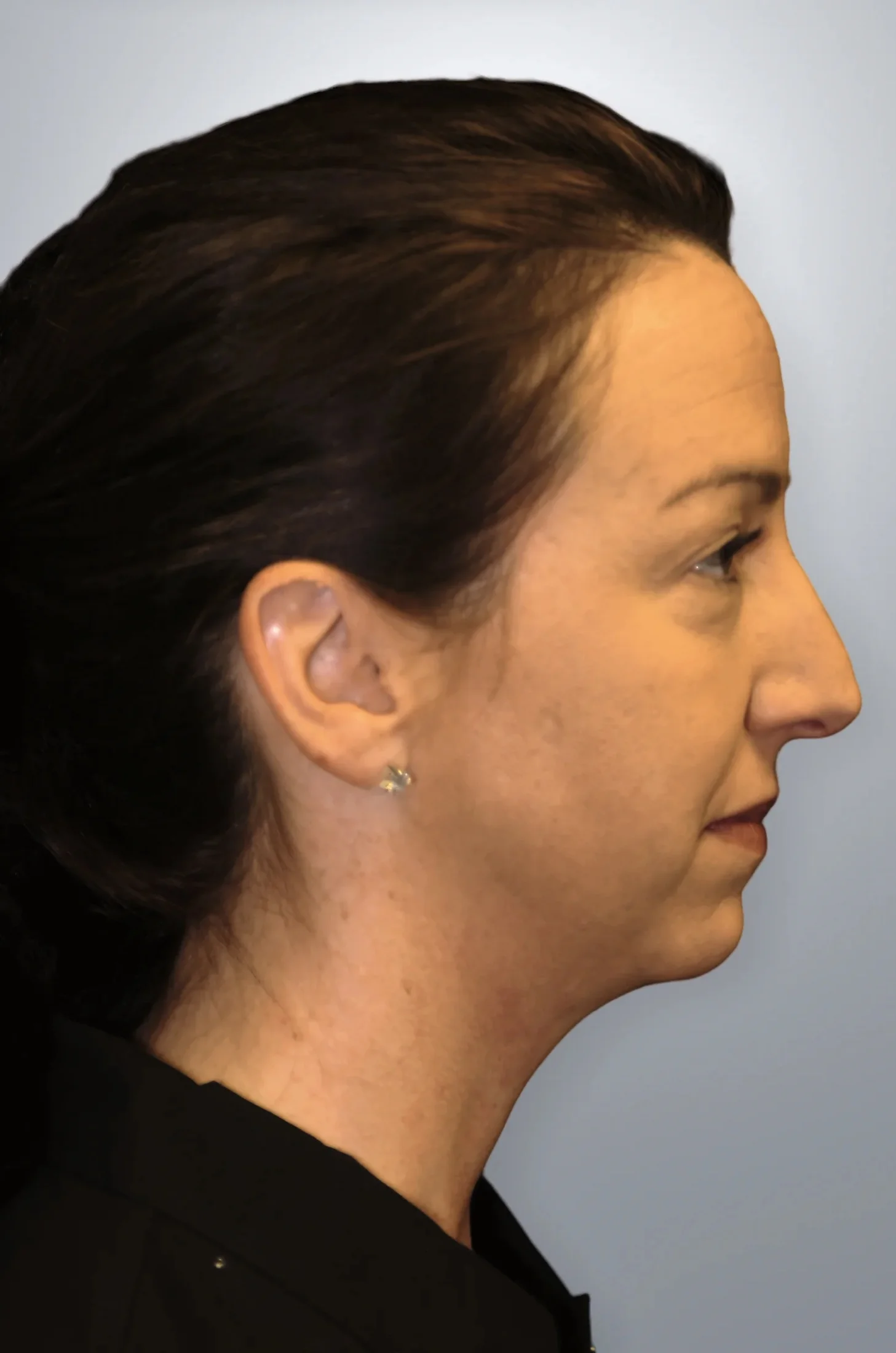
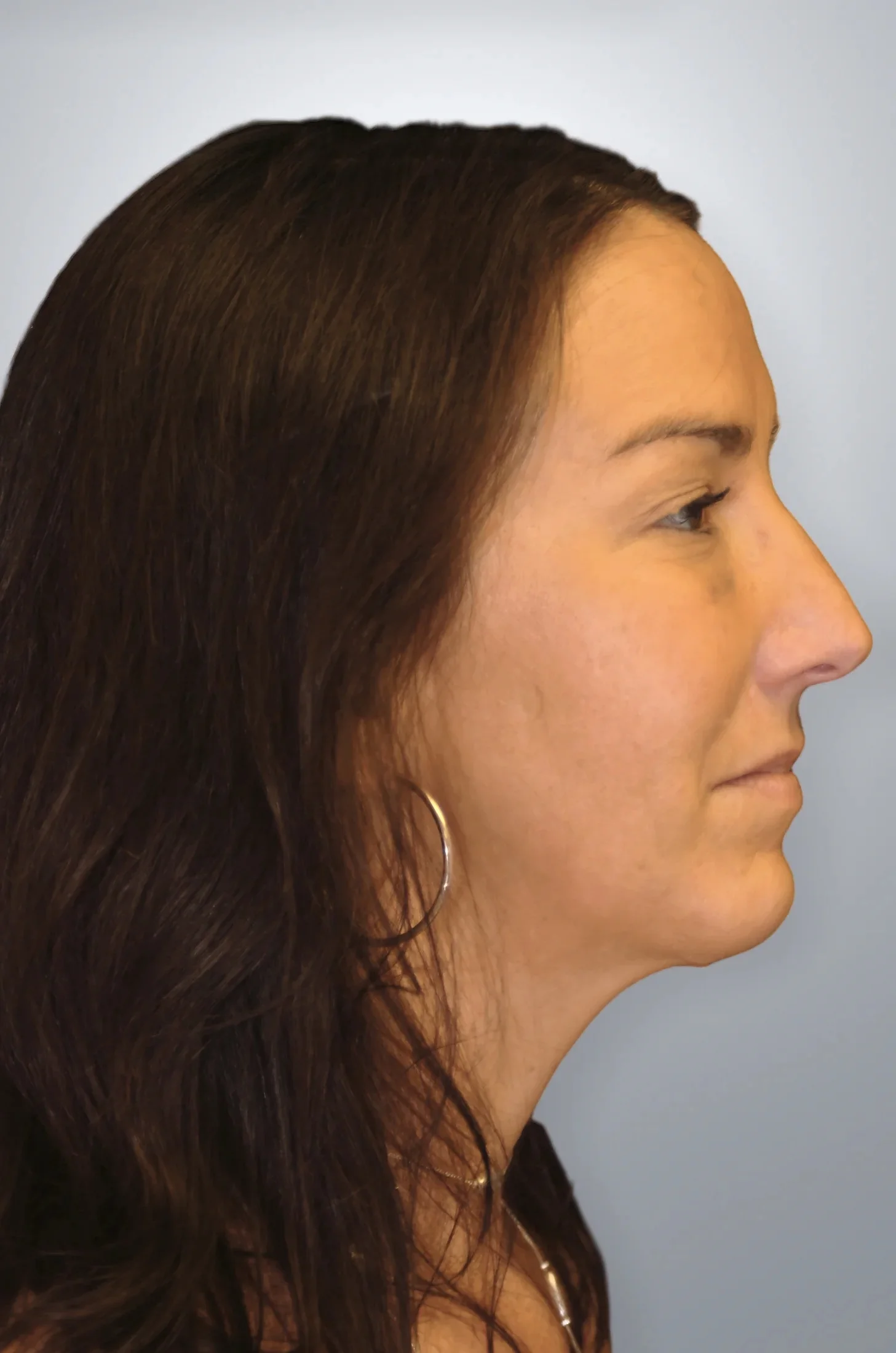
Non-clinical details in patient stories have been changed to protect privacy.
All photographs are of actual Edition Plastic Surgery patients. Individual results may vary.
Patient Stories
What to Expect
Cheek augmentation is a short operation with a manageable recovery. The main early restriction is a soft-food diet while the incision inside the mouth heals.
Your Consultation
Dr. Schwartz examines your face: cheekbone position, midface proportions, soft tissue, and how your cheeks relate to your other features. He discusses implant options, what result to expect, and whether adding another procedure would give a more balanced result.
Surgery Day
Cheek augmentation is done under general anesthesia as an outpatient procedure, typically taking one to one and a half hours on its own. You go home the same day with instructions for a soft-food diet and mouth care, and a follow-up visit, usually the next day.
Early Recovery
Swelling and some tightness in the midface are expected during the first week. You stay on a soft-food diet for two weeks while the incision inside the mouth heals, and use oral rinses to keep it clean. The cheeks usually feel tight and full, but not painful.
Return to Normal
Most patients are comfortable in public within seven to ten days, using makeup to cover any remaining bruising. Desk work resumes within 5 to 10 days. Strenuous exercise is restricted for three weeks. The added cheekbone definition shows early, even under the swelling.
Final Results
Final results show as swelling fully resolves over three to six months. Cheek implants are permanent, and the result does not fade over time.
Choosing the
Right Implant
Cheek implants look natural when they fit the proportions of the rest of the face. Dr. Schwartz chooses each implant for proportion, not size, after looking at how your cheeks relate to your other features.
Full Credentials →Plastic Surgeon
Performed
Practice
Rate
Is This Right for Me?
Cheek augmentation suits people who want permanent cheekbone definition that looks like natural bone rather than added volume.
Common Reasons
Patients Choose This
- Your cheekbones are flat or underdeveloped, and your face lacks definition.
- Your midface has lost volume with age, weight loss or genetics, and your face looks tired or deflated.
- You have liked your results with filler and want something permanent.
- You are in good general health and have realistic expectations.
- Your cheeks are uneven because of genetics or a past health condition.
- You don't smoke, and you can set aside time to recover from surgery.
Things to Consider
Before Proceeding
- You want only a subtle change. Filler may be a better first step.
- You have a dental or mouth infection. It must be fully treated first, because the implant goes in through the mouth.
- You smoke. Smoking slows healing, so you must stop completely before surgery.
- You expect perfection. Implants improve balance; they don't make a face flawless.
- You have a medical condition that is not under control and could affect surgery or recovery.
Dr. Schwartz will look at your facial proportions and tell you plainly whether implants, fat grafting, filler, or a combination will best meet your goals, and how much change suits your face.
Frequently Asked
Answers to the questions Dr. Schwartz hears most often from cheek augmentation patients.
Dr. Schwartz typically recommends this procedure for people whose midface looks 'deflated' or tired because of aging, weight loss, or naturally flat cheekbones, and who are in good health. At your consultation he will help you choose between a permanent implant and a subtle, temporary change with filler.
Filler gives temporary, reversible volume and works well for a subtle change with no downtime. If you want a permanent change to the shape of your face, implants are the permanent option. An implant looks like bone rather than added volume, which is a different effect from filler. Dr. Schwartz will tell you which suits your goals.
When properly sized and positioned, cheek implants look like naturally prominent cheekbones. Dr. Schwartz chooses the implant after assessing your bone structure and soft tissue. You should look refreshed, not like a different person.
There are no visible scars. Dr. Schwartz makes the incision inside the mouth along the upper gums, where it can't be seen.
Swelling and tightness in the midface are worst in the first week and then fade. You keep to a soft-food diet and gentle mouth care for two weeks while the incisions inside the mouth heal. Most patients are comfortable going out in public within seven to ten days, but Dr. Schwartz restricts strenuous exercise for three weeks. You will see a change quickly; final results are typically visible at three to six months.
Yes. Unlike filler, cheek implants do not need to be replaced or maintained. Each implant sits in a stable pocket against the bone (subperiosteal), where it is not subject to the shifting or distortion that can affect softer implants elsewhere in the body. Once healed, most patients never need a revision.
With implants, there is a small risk of infection, asymmetry, or the implant shifting. With filler, the usual problems are temporary bruising or swelling. Dr. Schwartz will go through the risks at your consultation.
The cost depends on whether you choose filler or implants, and whether the procedure is combined with other facial procedures. Implants are a higher one-time cost that covers the facility, anesthesia and surgical fees; filler has to be repeated. After your consultation and examination, you receive a personalized fee quote, and we discuss financing options.
Recovery & Concierge Care
Cheek augmentation is an outpatient procedure under general anesthesia, so you go home the same day. Dr. Schwartz sees you the next day, then typically at one week, three weeks, two months, four months and six months, adjusted to how you are healing. He does almost all follow-up visits himself, and at each one he gives you a specific plan for the weeks ahead. You leave with instructions for your soft-food diet and for keeping the incisions inside your mouth clean.
The office can be reached 24 hours a day. After-hours calls from patients recovering from surgery go directly to Dr. Schwartz, so an important question never waits until morning. The recovery is planned so that any responsible adult can look after you at home. If you would rather have a nurse caring for you at home or in a hotel, we can arrange it.