
Breast Reductionin Dallas
Reduces heavy breasts to ease neck, back and shoulder pain and restore proportion.
Relief From
Heavy Breasts.
For many women, large breasts are a daily physical burden. Over 25 years of practice, Dr. Schwartz has seen the weight cause chronic neck, back and shoulder pain, rashes under the breasts, and bra straps that cut grooves into the shoulders. It can keep you from exercising, make clothes hard to fit, and make you self-conscious about your size.
A breast reduction takes the weight off and lifts what remains. Dr. Schwartz removes excess breast tissue and skin, often adds liposuction to shape the sides of the chest, and raises the nipple and areola at the same time. He uses a vertical or an anchor incision depending on how much is removed. The aim is a breast that is smaller and well shaped, in proportion to your frame. Many patients feel the difference in their back and neck within the first days.

The Procedure
Dr. Schwartz uses a vertical (short-scar) or anchor (Wise-pattern) incision, removes excess breast tissue and skin, and reshapes what remains into a rounder, projecting breast.
Every breast reduction includes a lift, so the breast that remains sits higher and firmer on the chest. Large breasts usually sag, and a reduction corrects both the weight and the sagging.
During the operation the nipple and areola are raised, and the areola is made smaller to match the new breast. Dr. Schwartz keeps the nipple attached to its blood supply (a pedicle technique) to protect sensation and the possibility of breastfeeding later.
Dr. Schwartz often adds liposuction to the side of the chest and under the arm so the breast blends smoothly into the chest wall.
Breast reduction is performed under general anesthesia in our private surgical suite. Dr. Schwartz usually places small drains for a short time to control swelling. Most patients find the first days manageable and return to work within 4 to 5 days.
Breast reduction is one of the few procedures that insurance may cover, when it treats documented medical problems such as chronic back pain or nerve symptoms. At your consultation our team explains the medical records insurers require and guides you through the submission.
Reduction Portfolio
Drag the handle to compare.
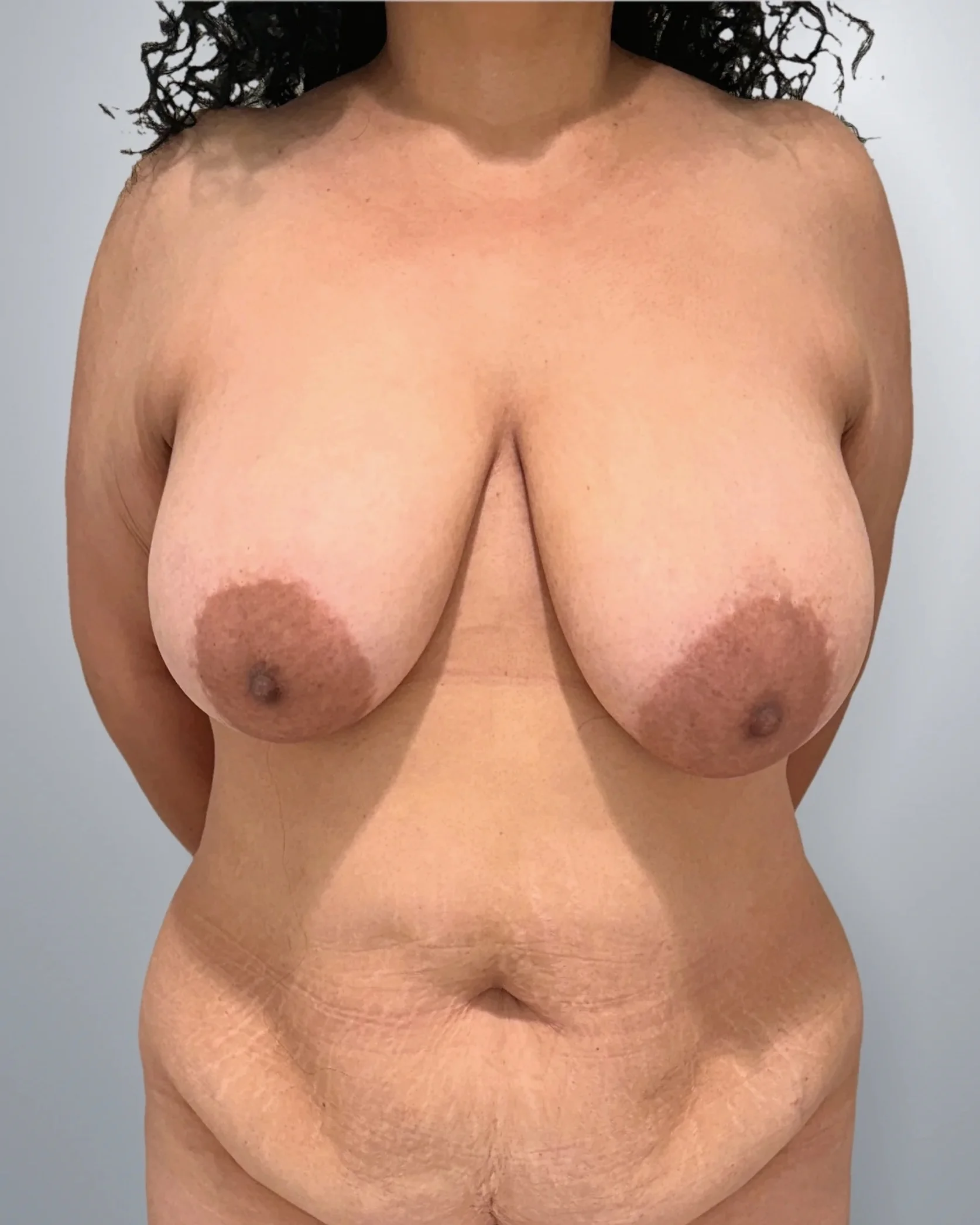
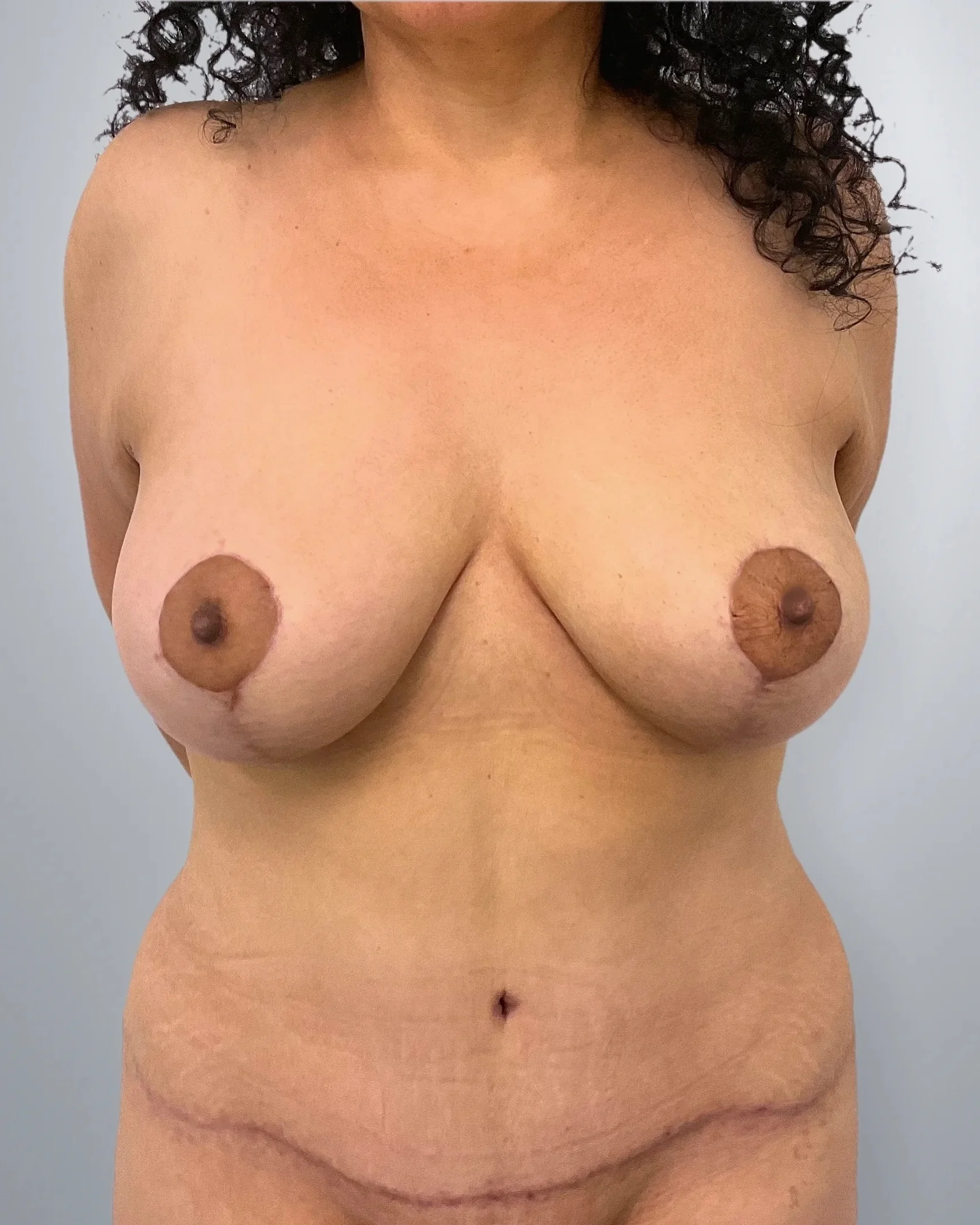
Non-clinical details in patient stories have been changed to protect privacy.
All photographs are of actual Edition Plastic Surgery patients. Individual results may vary.
Reduction Stories
What to Expect
What happens from consultation to final result.
Your Consultation
Dr. Schwartz examines you, asks about your symptoms, goals and concerns, and outlines a surgical plan for your frame. If insurance may cover the operation, his team explains the paperwork at this appointment.
Pre-Operative Planning
Once you decide to go ahead, our patient concierge arranges what is needed before surgery: lab work, medical clearance and a preparation guide. Where insurance applies, our team handles the pre-authorization for you.
Surgery Day
Breast reduction is performed as an outpatient procedure under general anesthesia, typically taking two to four hours depending on volume and technique. You are discharged the same day with surgical drains if placed, all post-operative supplies, and written instructions.
Early Recovery
Many patients report a dramatic reduction in back and neck pain within the first days, often before the swelling has gone down. A supportive surgical bra is worn continuously. Light activity around the home is appropriate from day one, with a follow-up appointment in the first week to assess healing.
Return to Activity
Most patients return to desk work within 4 to 5 days. Exercise and strenuous activity are reintroduced gradually over six to eight weeks. The scars are pink and slightly raised at first, which is normal. Dr. Schwartz gives you a scar management plan to help them heal well.
Final Results
The breast shape continues to refine as swelling resolves and tissues settle over three to six months. Scars mature and fade significantly over twelve to eighteen months.
Why Choose
Dr. Schwartz
Removing tissue is the easy part. Shaping what remains into a well-proportioned breast that sits in the right place takes the same attention as an augmentation.
Full Credentials →Plastic Surgeon
Performed
Practice
Rate
Is This Right for Me?
Women of many ages and circumstances have breast reductions. Whether your concern is mainly physical, mainly about how you look, or both, a consultation will show what is possible.
Common Reasons
Patients Choose This
- You have chronic neck, back or shoulder pain from the weight of your breasts.
- You get rashes or irritation under your breasts that don't clear up with ordinary care.
- Your breasts keep you from being as active as you want, or make you self-conscious.
- Your bra straps leave grooves in your shoulders, or you struggle to find clothes that fit.
- You are in good general health and at a stable weight.
- You want smaller, better proportioned breasts and have realistic expectations.
Things to Consider
Before Proceeding
- You plan to lose a lot of weight. Results are most predictable at a stable weight.
- You are pregnant, nursing, or planning more children soon.
- You smoke. Dr. Schwartz requires you to stop all nicotine before surgery, for your safety and healing.
- You have a medical condition that is not well controlled and could affect your recovery.
- You are worried about scars. A reduction cannot be done without incisions, though Dr. Schwartz keeps the scars as small as he can.
Dr. Schwartz's consultations are private, unhurried, and without obligation. If you are unsure whether surgery is right for you, that conversation is the place to start.
Breast reduction in Dallas
Dr. Robert Schwartz performs breast reduction surgery at Edition Plastic Surgery, his practice at 7859 Walnut Hill Lane in North Dallas. The practice was formerly Robert Schwartz Plastic Surgery; the surgeon, team and office are the same. Every new patient has a one-hour consultation with Dr. Schwartz; virtual consultations are available before an in-person visit.
Further reading
Frequently Asked
Answers to the questions Dr. Schwartz hears most often from breast reduction patients.
If your breasts are heavy enough to cause chronic neck and back pain or skin irritation, or to keep you from an active life, you are likely a good candidate. Dr. Schwartz also looks for patients at a stable, healthy weight with realistic expectations for a smaller breast in proportion to their frame.
For many patients the main goal is physical relief. Removing excess tissue and skin lightens the chest and shifts your center of gravity, which takes strain off your neck, back and shoulders. Many women notice a dramatic drop in neck, back and shoulder discomfort within the first few days of recovery.
Most patients return to desk work within 4 to 5 days. You wear a surgical bra to support the healing tissue, and Dr. Schwartz may place temporary drains to control swelling. You will feel lighter almost immediately, but the breasts take about a month to settle. Strenuous exercise is off limits for six to eight weeks to let the internal stitches heal.
Scars are unavoidable. Dr. Schwartz keeps them as small as he can, using techniques refined over 25 years. He uses the vertical technique whenever the anatomy allows, which limits the scar to around the areola and a short vertical line. The scars fade a great deal over 12–18 months and sit where a bra or swimsuit hides them.
Yes. Dr. Schwartz makes the areola smaller and moves the nipple higher, in proportion to your new breast size. He uses techniques that preserve the nipple pedicle and its connections to the breast tissue, to keep sensation and, where possible, the ability to breastfeed later.
The results last. Your breasts will still change with large weight changes, pregnancy and age, but the improvement in proportion remains.
As with any surgery under general anesthesia, risks include infection, bleeding and changes in nipple sensation. At your consultation Dr. Schwartz reviews your medical history carefully to make sure surgery is safe for you.
Many insurance plans cover breast reduction when medical necessity, such as chronic pain or nerve symptoms, is documented. Our team guides you through the paperwork and pre-authorization. If you are paying yourself, the cost depends on how complex your case is. You receive a detailed, transparent quote after your consultation with Dr. Schwartz.
Recovery & Concierge Care
You go home the same day. Dr. Schwartz sees you the next day, then typically at one week, three weeks, two months, four months and six months, adjusted to how you are healing. He does almost all follow-up visits himself, and at each one he gives you a specific plan for the weeks ahead. You wear a medical sports bra to support your breasts while they heal, and you leave with instructions for your drains, if you have them, and a plan for your scars.
The office can be reached 24 hours a day. After-hours calls from patients recovering from surgery go directly to Dr. Schwartz, so an important question never waits until morning. The recovery is planned so that any responsible adult can look after you at home. If you would rather have a nurse caring for you at home or in a hotel, we can arrange it.