
Brow Liftin Dallas
Raises a low or heavy brow, through small endoscopic incisions or an incision at the hairline.
Lifting a Heavy Brow
Without a Surprised Look.
The brow and forehead frame everything below them. With age the brow drops. That makes the eyes look smaller and heavier, and it gives you a tired or stern expression, even when you are well rested, that eye makeup can't fully hide. The eyelids can look as if they have too much skin when the real cause is the brow pushing tissue down onto them.
Dr. Schwartz raises the brow and weakens the frown muscles in one operation, treating heavy lids and frown lines together. He performs the endoscopic brow lift almost exclusively: it raises and secures the brow through tiny incisions hidden in the hairline, so the scars stay in the hair and recovery is significantly faster than with traditional open techniques. He lifts the brow back to where it used to sit and no higher, which avoids a surprised look.
The Procedure
Dr. Schwartz specializes in the endoscopic brow lift, which uses a small camera and small incisions. He also uses temporal, trichophytic, and lateral approaches to suit different hairlines. These techniques smooth the forehead without the long scar or prolonged numbness of a traditional open brow lift. He also performs open brow lifts when they suit the patient better.
Dr. Schwartz returns the brow to its youthful position rather than raising it higher, which avoids a startled look. Based on your bone structure and anatomy, he typically raises the brow two to four millimeters.
Incisions are placed within the hair or along the hairline, where the hair hides them, and usually fade to fine lines over the first year. An endoscopic lift uses tiny openings in the scalp; a temporal lift uses incisions above the temples.
During the procedure, Dr. Schwartz can treat the corrugator and procerus muscles directly. These are the muscles that cause deep frown lines between the brows. Weakening or partly removing them softens a 'stern' or 'worried' expression for longer than neurotoxin injections alone can.
Dr. Schwartz uses general anesthesia or IV sedation, depending on the technique and your health. He will go through the choice with you at your consultation.
Most patients return to office work within 4 to 7 days, and should allow 3 to 4 weeks before an important social or business event. Wait three weeks before vigorous exercise. Cold compresses help, and Dr. Schwartz recommends sleeping upright for the first several nights.
A brow lift is often combined with a deep plane facelift or eyelid surgery. Dr. Schwartz plans the combination so that each procedure treats a different part of the face and no one area stands out.
Brow Lift Portfolio
Drag the handle to compare.
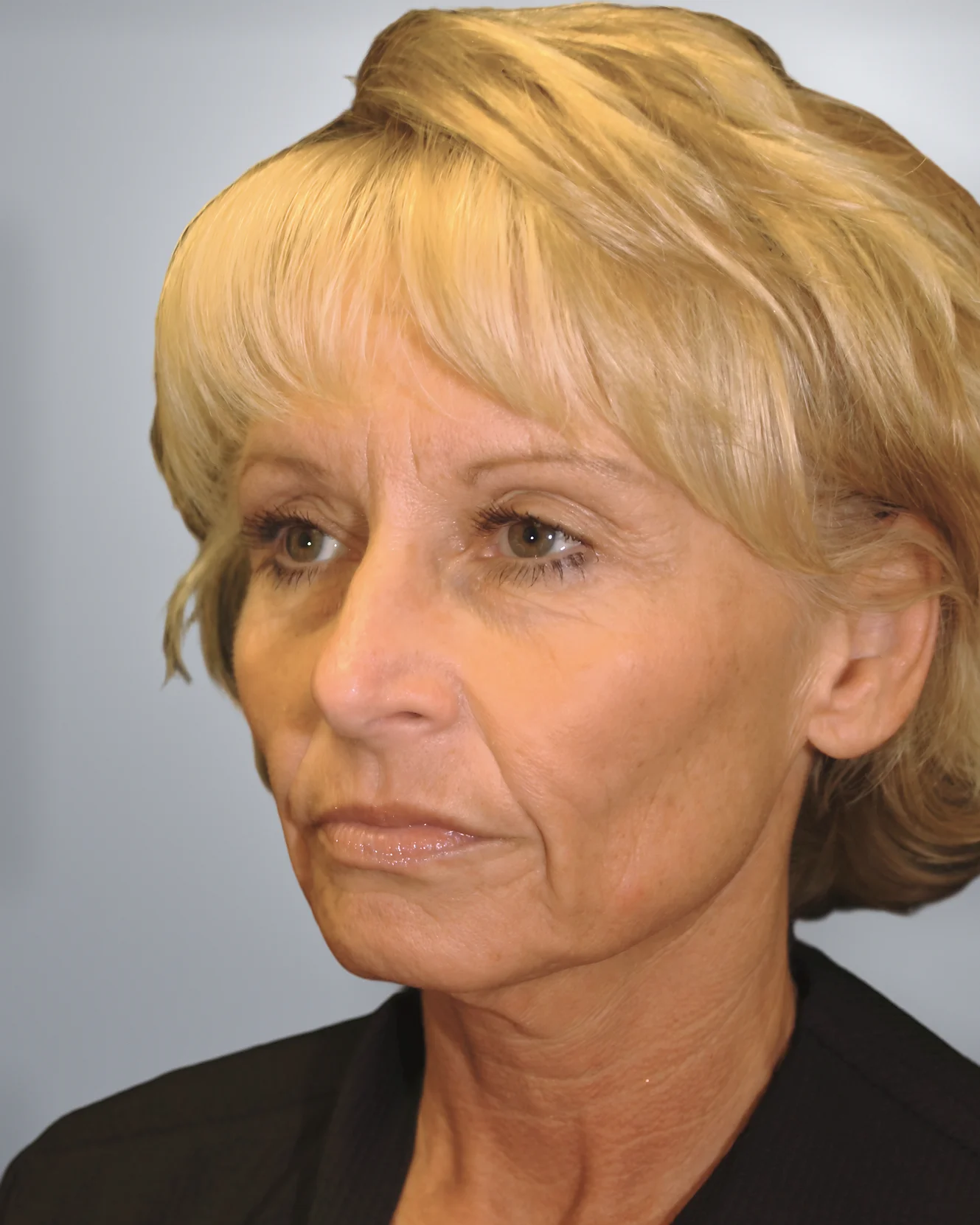
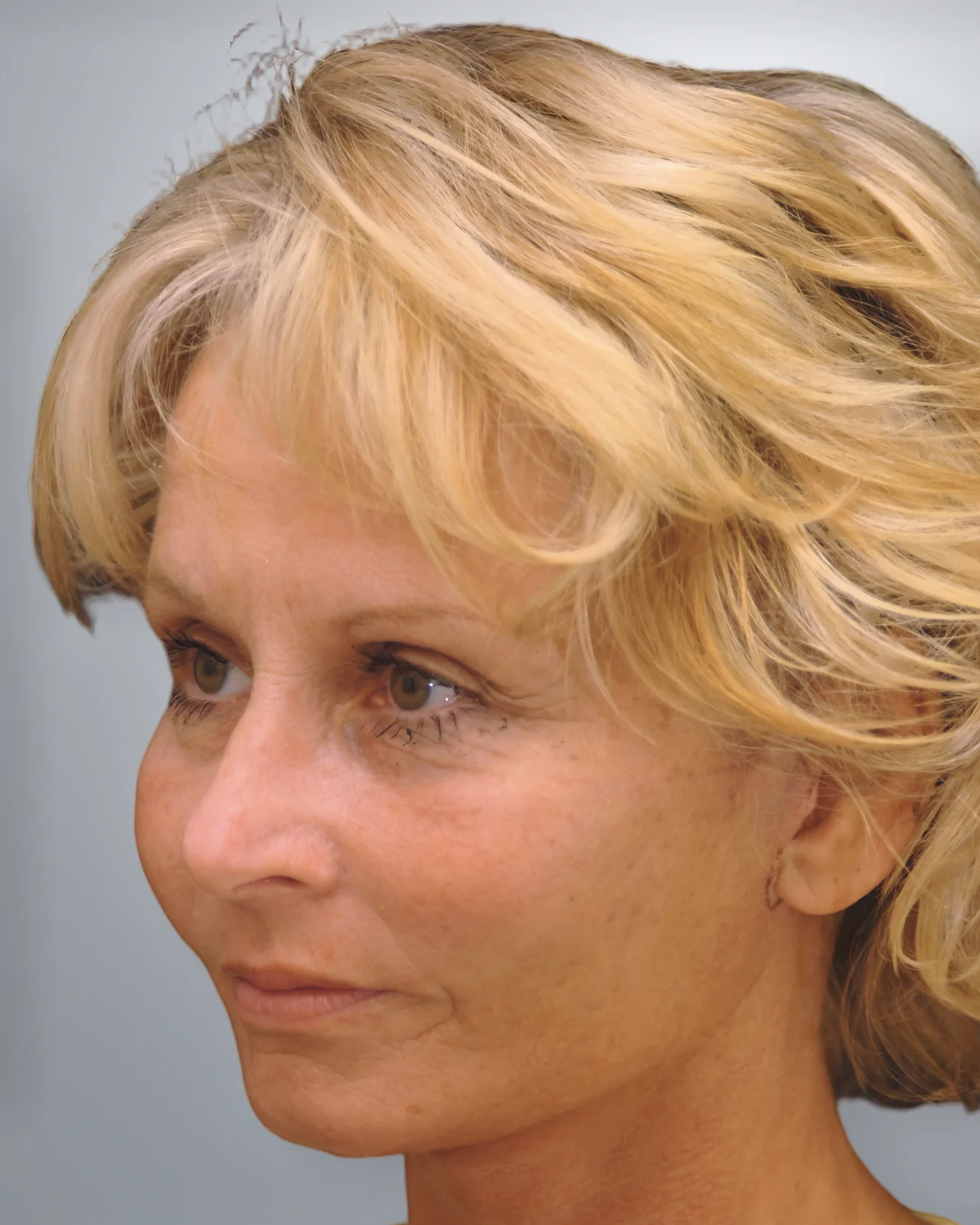
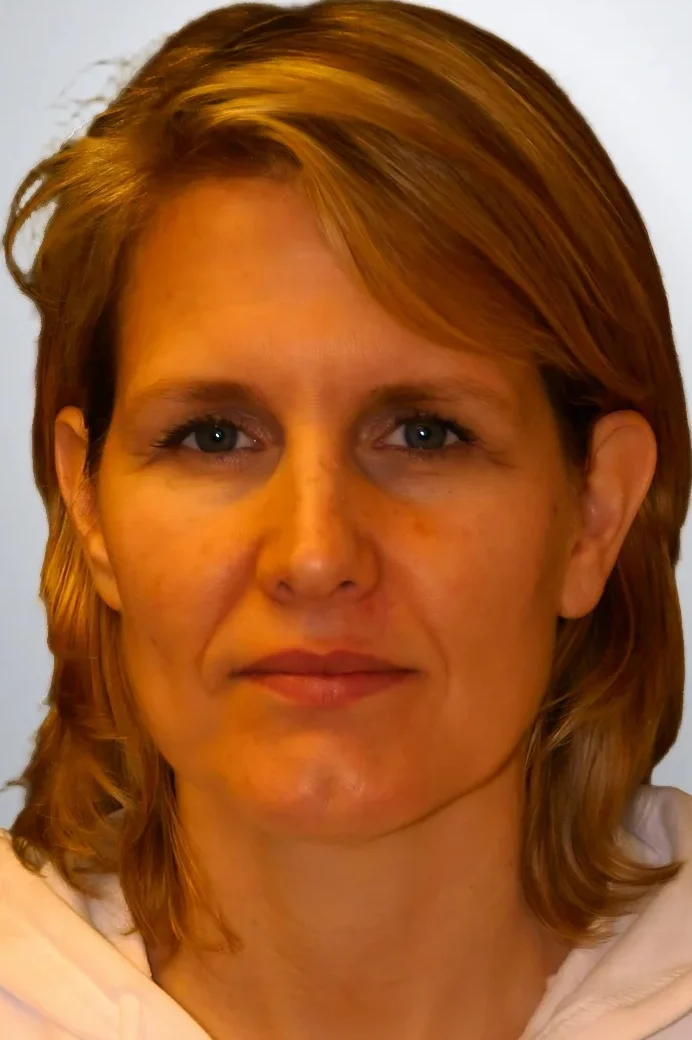
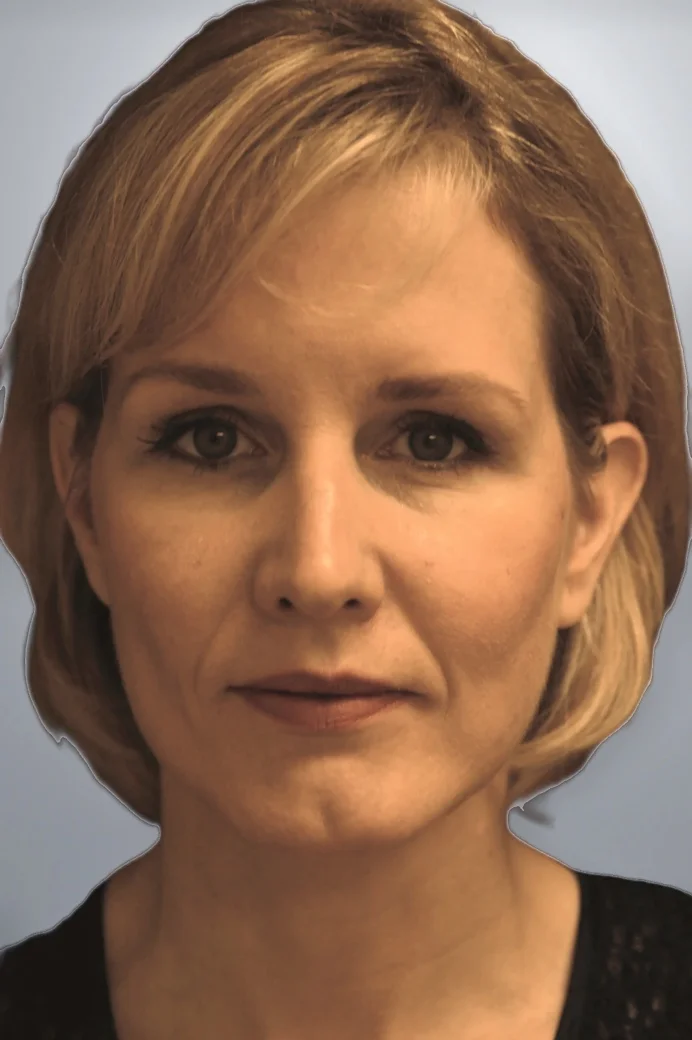
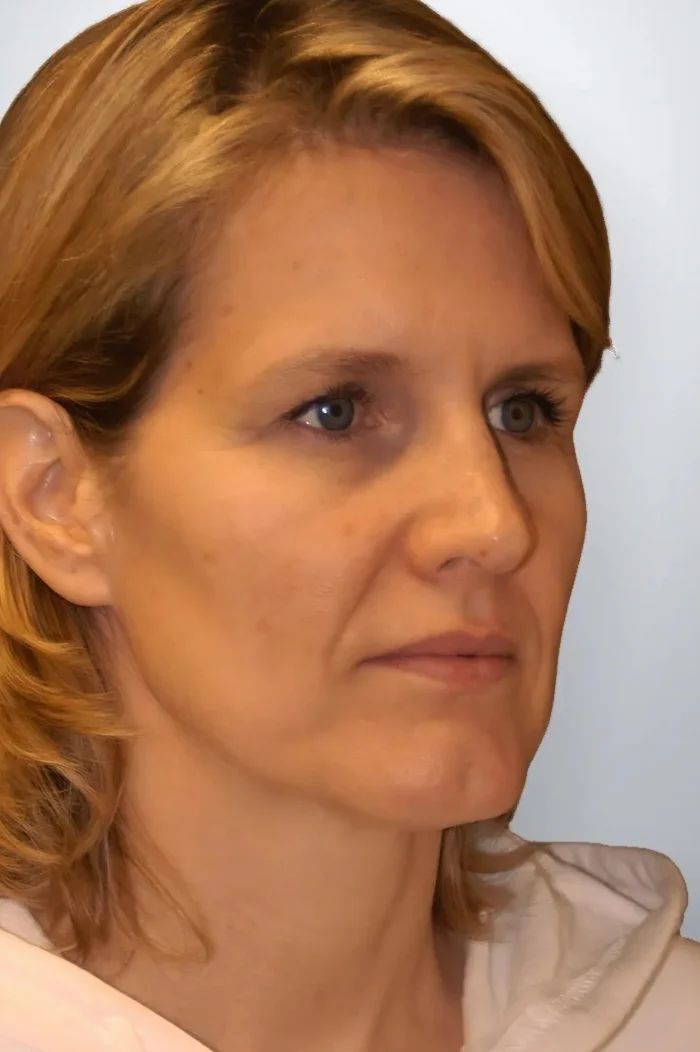
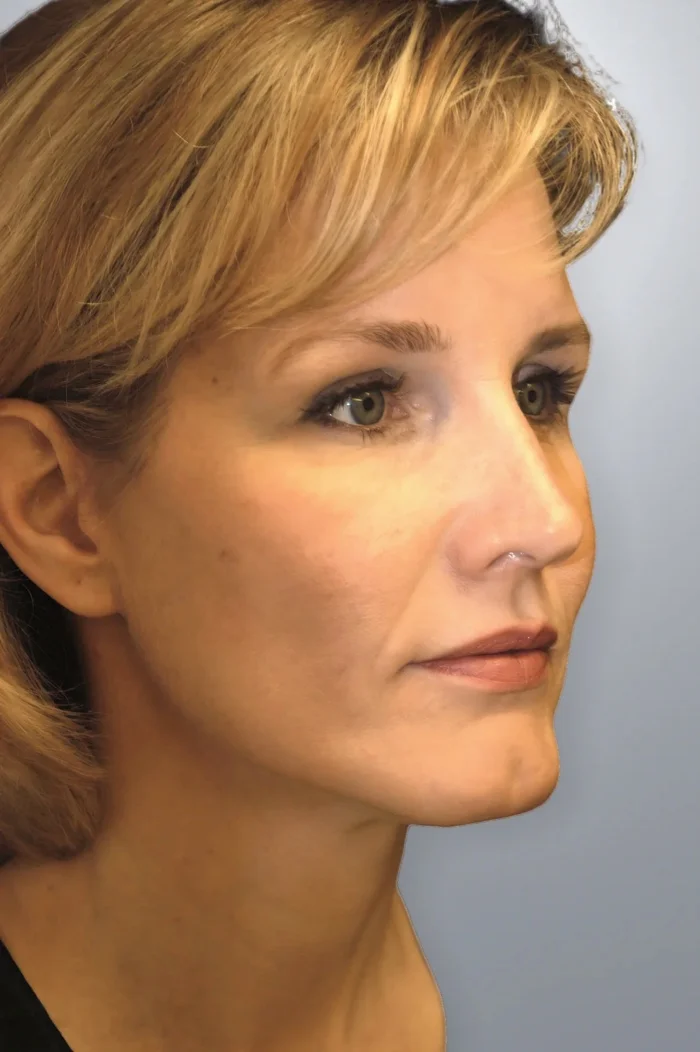
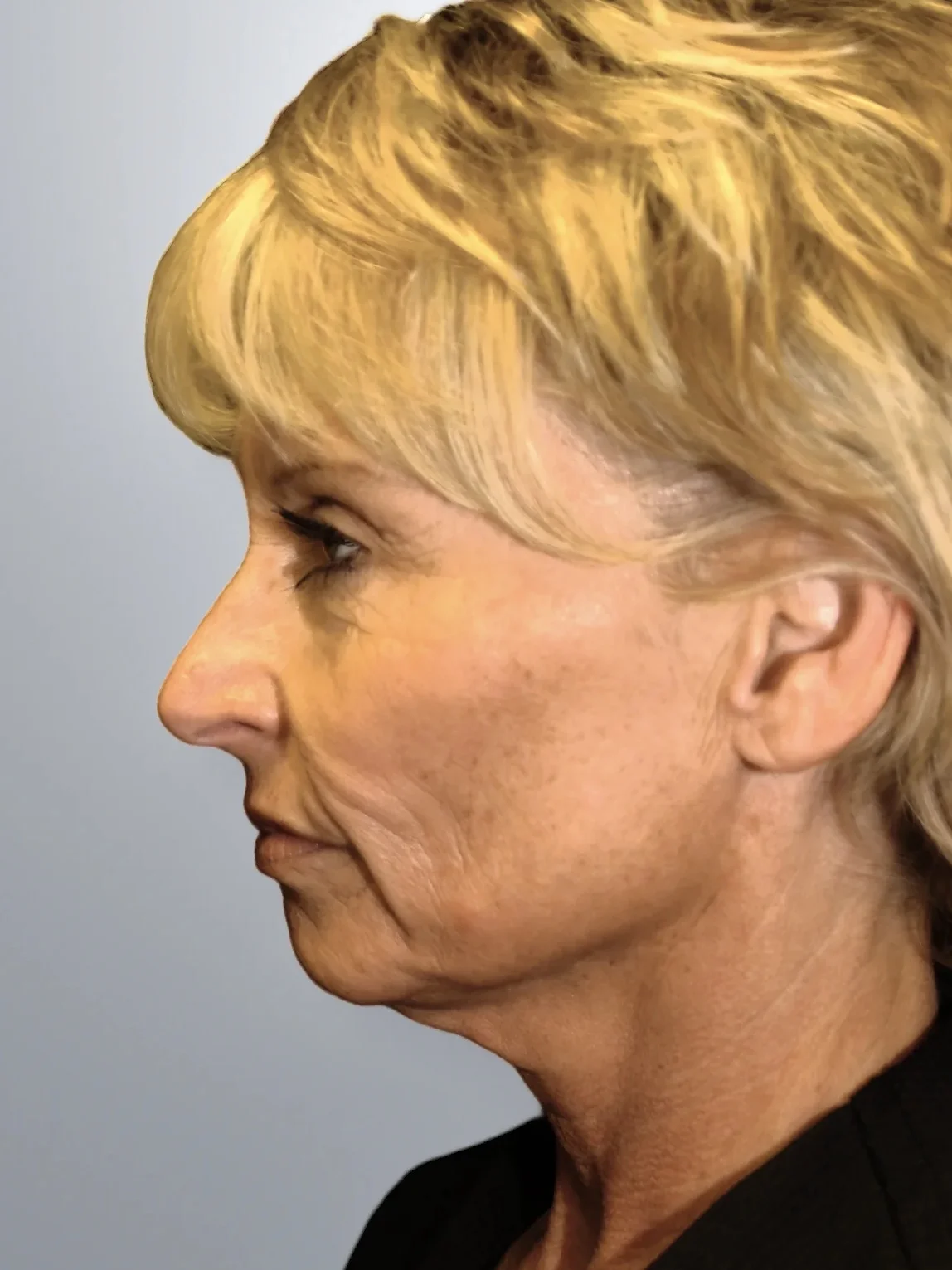
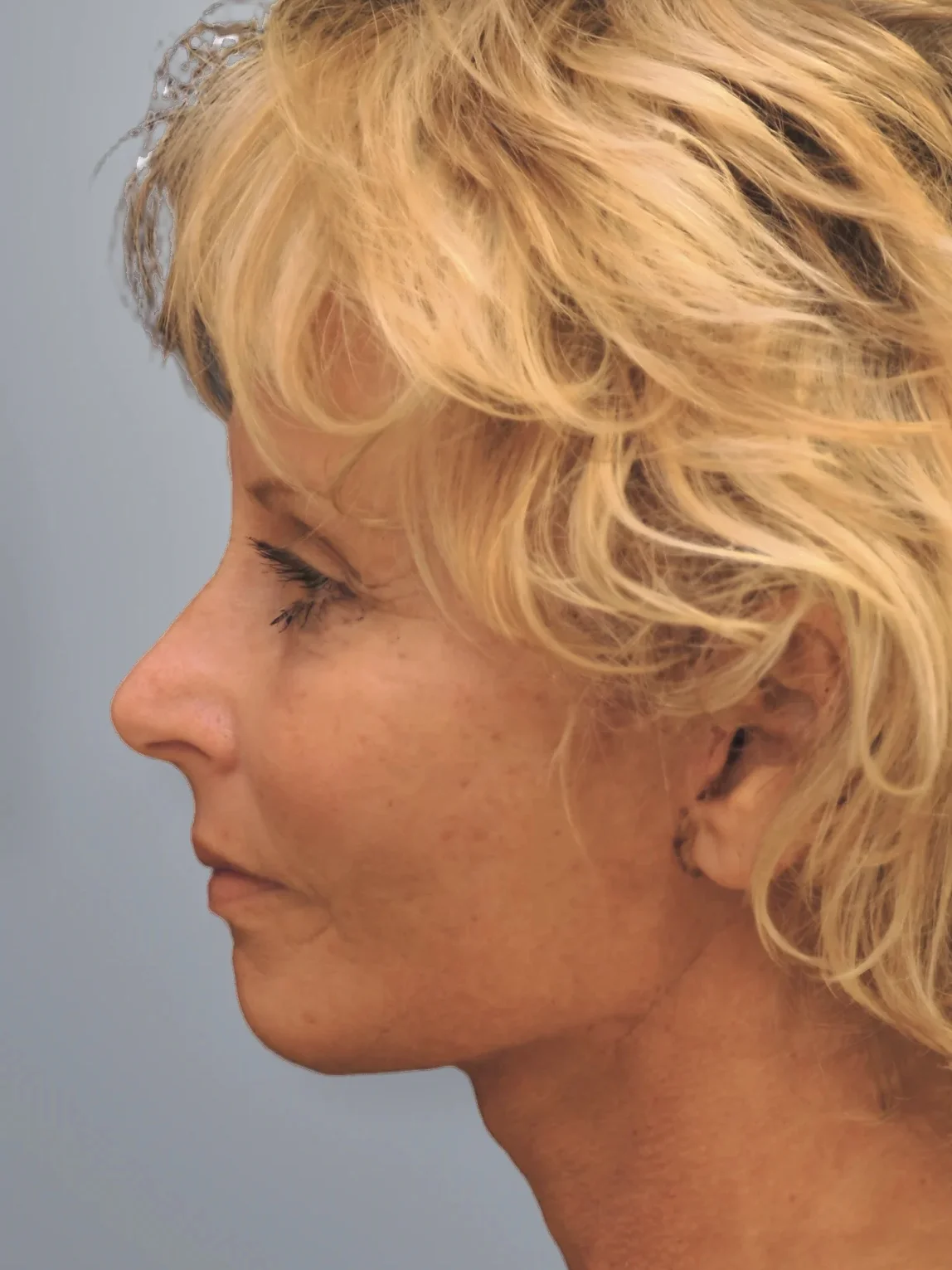
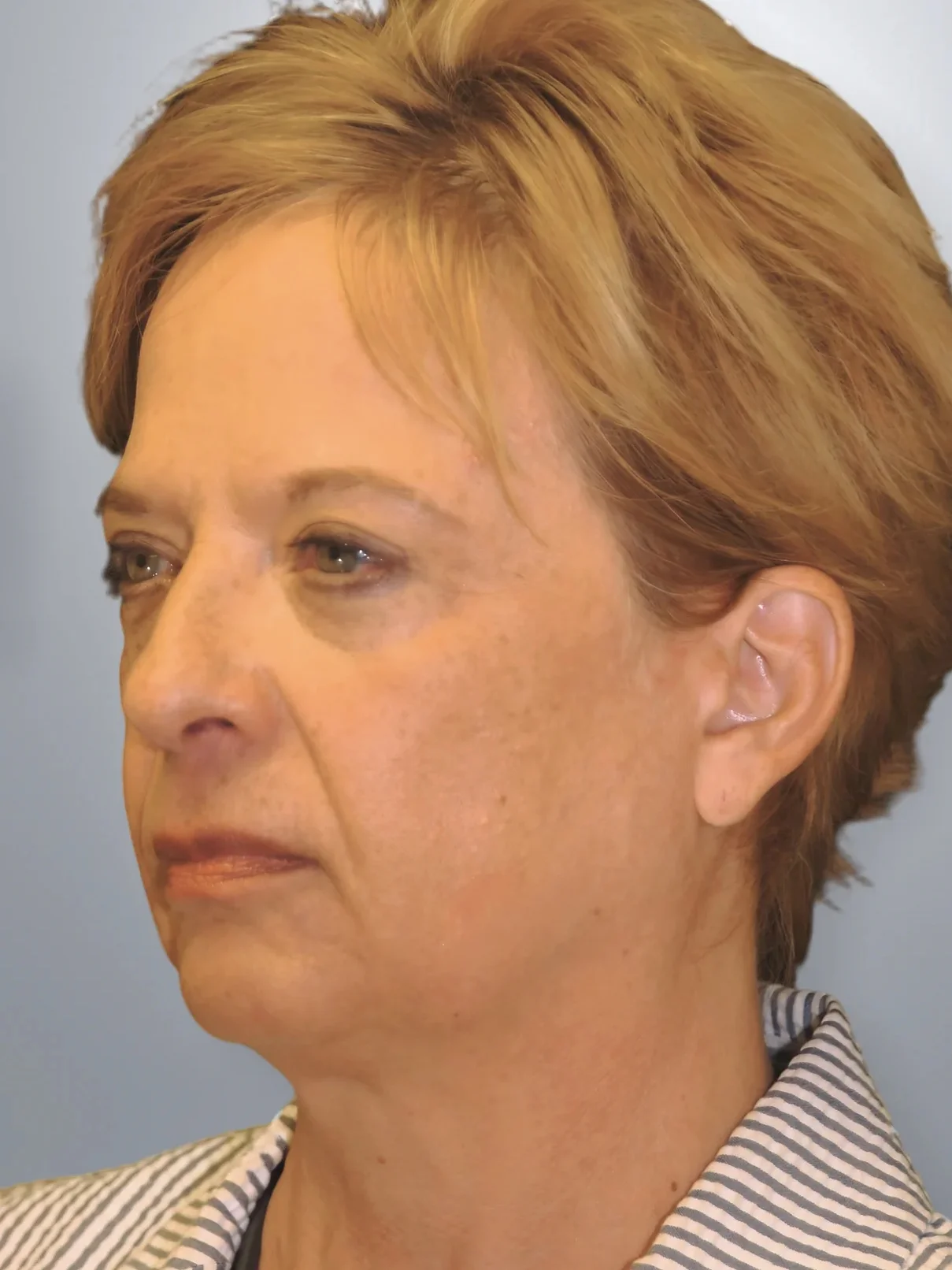
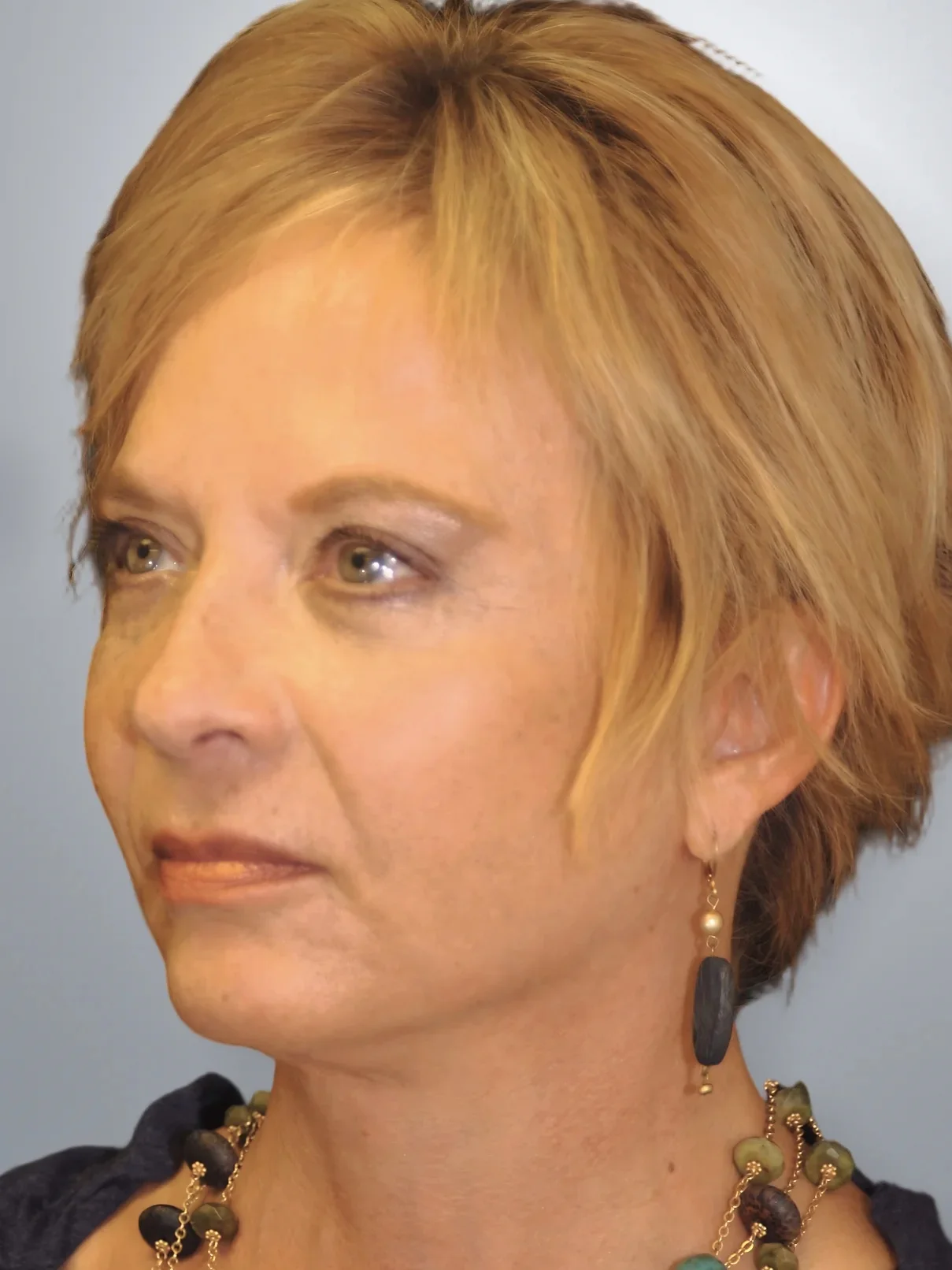
Non-clinical details in patient stories have been changed to protect privacy.
All photographs are of actual Edition Plastic Surgery patients. Individual results may vary.
Brow Lift Stories
What to Expect
What happens from your first visit to the final result of an endoscopic brow lift.
Your Consultation
Dr. Schwartz examines your brow position, forehead anatomy and skin quality, and works out whether fullness in your upper eyelids comes from a low brow, extra eyelid skin, or both. That decides whether you need a brow lift, a blepharoplasty, or both. He will discuss how much the brow can realistically be raised and show you examples of results in faces like yours.
Surgery Day
An endoscopic brow lift is performed under general anesthesia or IV sedation as an outpatient procedure, typically taking one to one and a half hours. When combined with a facelift or blepharoplasty, it is done in the same session. You go home the same day with a light dressing and your aftercare instructions.
Early Recovery
Swelling and bruising around the eyes and forehead are normal and most pronounced during the first three to four days. A light compression headband is worn for the first week. Most patients are up and about from day one, and the main sensation is tightness rather than pain.
Return to Normal Life
Most patients look recovered enough for most casual purposes, with makeup, within 10 to 14 days; allow 3 to 4 weeks before an important social or business event. Scalp numbness and tingling are normal and fade gradually over several weeks. Strenuous exercise is restricted for three weeks. The brow's new position is visible almost immediately.
Final Results
Remaining tightness and any scalp numbness resolve over three to six months. By then the brow has settled in its final position and the frown lines between the brows have softened. The result typically lasts seven to twelve years, after which a maintenance procedure may be considered.
Why Choose
Dr. Schwartz
The difference between a brow lift that looks surgical and one that looks natural is a few millimeters. Dr. Schwartz aims to put the brow back where it was, not higher, so the eyes look rested and your face still looks like yours.
Full Credentials →Plastic Surgeon
Performed
Practice
Rate
Is This Right for Me?
A brow lift suits people whose brow has dropped below where it used to sit, giving them a tired, heavy or stern look that doesn't match how they feel.
Common Reasons
Patients Choose This
- Your brow has dropped, or your forehead has deep furrows, and you look tired or stern even when you are well rested.
- You are bothered by deep frown lines between the brows that injectables can no longer fully correct.
- Your upper eyelids look full mainly because your brow sits low, not because of extra eyelid skin.
- You want to look rested and refreshed, not overdone.
- You are in good general health and don't smoke, which matters for safe healing and a lasting result.
- You are in your late thirties or older and see loose skin and sagging in the upper third of your face.
Things to Consider
Before Proceeding
- Your main concern is extra eyelid skin and your brow hasn't dropped much. Dr. Schwartz may recommend a blepharoplasty instead.
- Your brow is naturally low and part of your look. Raising it surgically may not be right for you.
- Your brow has only just started to drop. Dr. Schwartz may suggest a neurotoxin instead.
- You smoke. Healing depends on good circulation, so you must quit well before surgery.
- You have had forehead surgery before or have significant medical conditions. Dr. Schwartz will need to evaluate your anatomy and safety in more detail.
One of the most common findings at a brow lift consultation is that the patient actually needs a blepharoplasty, or both. Dr. Schwartz will tell you which procedure, or which combination, will actually treat your concern.
Frequently Asked
Answers to the questions Dr. Schwartz hears most often from brow lift patients, especially about whether the result looks natural.
Many patients who think they need an upper blepharoplasty (eyelid lift) actually have a low brow as the main cause of their heavy, tired look. When the brow drops, it pushes tissue down and creates 'excess' skin on the lids that may not really be there. Dr. Schwartz examines both the brow position and the eyelid itself to decide whether a brow lift, a blepharoplasty, or both will treat the actual cause.
An endoscopic brow lift uses small incisions within the hairline and a small camera to raise and secure the forehead tissues, which means minimal scarring and a faster recovery. Dr. Schwartz performs endoscopic lifts almost exclusively because they give natural, lasting results with no visible scarring in the vast majority of patients. A coronal lift uses a longer incision across the scalp. For some patients, such as those with a high forehead, Dr. Schwartz may recommend a trichophytic incision along the hairline instead.
Raising the brow too high is the most common error in brow lift surgery, and it is what gives the 'pulled' or artificial look. Dr. Schwartz avoids it. He moves the underlying muscles and tissues back to their youthful, anatomically correct position rather than pulling the skin tight. For most patients, two to four millimeters of lift at the outer brow makes a large difference in how rested they look, without a startled expression.
Swelling and bruising are worst during the first three to four days. Most patients can go back to office work in 4 to 7 days and look recovered enough for most casual purposes by 10 to 14 days. Allow 3 to 4 weeks before an important social or business event. You may have temporary scalp numbness or tingling as the nerves heal, which fades gradually over several weeks. Dr. Schwartz advises waiting three weeks before returning to the gym or any strenuous exercise.
An endoscopic brow lift typically lasts seven to twelve years, because the tissues are secured to the bone underneath. Aging continues, but from a younger starting point. Even a decade later, many patients need only minor maintenance or a smaller touch-up rather than the full procedure again.
Risks include infection and temporary changes in skin sensation, such as scalp numbness. Dr. Schwartz reduces them with endoscopic technique and precisely placed incisions. He will go through your health history and the risks in detail at your consultation.
The fee depends on the technique (a lateral, endoscopic, or traditional lift) and on whether the brow lift is done alone or with a facelift or blepharoplasty. Dr. Schwartz plans each operation for the individual patient, so you receive a detailed fee quote after your consultation. Financing is available.
Recovery & Concierge Care
You go home the same day. Dr. Schwartz sees you the next day, then typically at one week, three weeks, two months, four months and six months, adjusted to how you are healing. He does almost all follow-up visits himself, and at each one he gives you a specific plan for the weeks ahead. For the first week, sleep with your head raised and use cold compresses to help the swelling go down.
The office can be reached 24 hours a day. After-hours calls from patients recovering from surgery go directly to Dr. Schwartz, so an important question never waits until morning. The recovery is planned so that any responsible adult can look after you at home. If you would rather have a nurse caring for you at home or in a hotel, we can arrange it.